
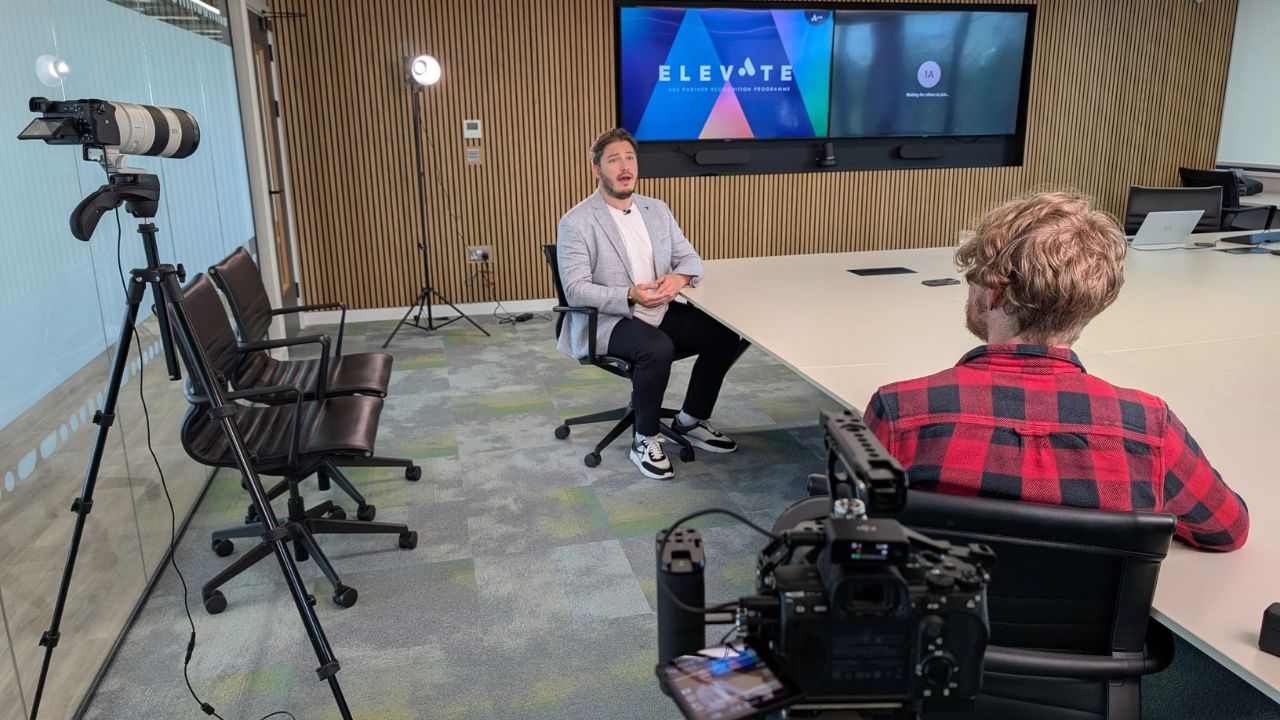
Case studies and testimonials both promise social proof, but they work in very different ways. Here is how to tell them apart, when to use each, and why video changes everything.
Case Studies vs Testimonials at a Glance
| Testimonial | Written case study | Video case study | |
|---|---|---|---|
| What it is | A short endorsement in the client’s words | A structured account of a problem, the work and the result | The same story told on camera by the client |
| Typical length | One to three sentences | 600 to 1,500 words | 90 seconds to three minutes |
| Buyer stage | Top of funnel | Bottom of funnel | Middle through to bottom |
| Effort to produce | Low, usually one email | Moderate, needs an interview and sign-off | Higher, needs a filming day and an edit |
| What it proves | How it felt | What happened | Both, in the client’s own voice |
| Where it lives | Website, social, ads | Proposals, pitch decks, service pages | Homepage, service pages, LinkedIn, sales calls, paid media |
| Hard to fake? | No | Somewhat | Yes |
What Is a Case Study?
A case study is a structured, evidence-based account of how your business solved a real problem for a real client. It follows a clear narrative: here was the challenge, here is what we did, and here are the results.
Unlike a quick endorsement, a case study takes the reader or viewer through the full journey because it is detailed, specific, and built around outcomes you can point to.
Types of Case Study
Case studies come in a few different formats. Written case studies are the most common and live comfortably on a website or in a pitch deck; slide-based case studies are popular for sales presentations; and video case studies combine all of the above into a format that people will actually watch.
How Do You Get Case Studies?
Getting a good case study takes a little more effort than asking for a quick testimonial or star-based review. You need a willing client who is happy to be named, some measurable results to reference, and enough of their story to build something compelling.
The best time to ask is shortly after a project ends, when results are fresh, and your client is still in the warm glow of a job well done. Make it easy for them, and offer to handle the writing or production yourself, so they only need to show up and talk.
Where Should Case Studies Live?
Case studies work hard across multiple stages of the buyer journey. In fact, they are one of the few marketing and sales assets that can be used at every single stage.
Firstly, they belong on your website, ideally with their own dedicated page, making it really easy for prospects to find them. They also perform well in email sequences when a prospect is close to a decision. Finally, you can use them in paid advertising, as pre-sales content on landing pages, and as leave-behinds after a discovery call.
It’s safe to say that they are versatile, and a single well-produced case study can be repurposed across several channels without losing its impact.
The Pros of Case Studies
- Builds deep credibility with specific, verifiable results
- Works at the bottom of the funnel, where decisions happen
- Can be repurposed across multiple channels
- Demonstrates your process, not just your outcome
- Shows prospective clients exactly what working with you looks like
The Cons of Case Studies
- Takes more time and effort to produce
- Requires client sign-off and willingness to be featured
- Can feel dry or overly formal in written form
- Results need to be genuinely impressive to land well
- May not scale quickly if you are a newer business
- Results can be selectively framed to flatter
What Is a Testimonial?
A testimonial is a short statement from a client expressing how they felt about working with you. It is personal, direct, and immediate. Think of it as the word-of-mouth recommendation in written or recorded form.
Testimonials are everywhere, and for good reason. A few honest words from a happy client can do more to reassure a nervous prospect than any amount of clever copy you write about yourself.
Types of Testimonial
The classic written testimonial is the one you see in quotation marks on almost every website. Star ratings and short reviews are a lighter version of the same thing. Then there are spoken testimonials, which carry more weight because a real person is saying the words on camera, with their name and face attached.
Video testimonials in particular are becoming the norm, especially in B2B. When a decision-maker can see and hear a peer describe their experience, it lands differently than text on a page. I’ve written more about turning happy customers into new business if you want the practical side of that.
How Do You Get Testimonials?
The simplest approach is to ask. A short email to a happy client, sent at the right moment, will produce most of what you need. If you want something more polished, a brief recorded call works well. Keep it conversational and avoid giving people a script; the authenticity is the whole point.
The Pros of Testimonials
- Quick and easy to gather at scale
- Works throughout the funnel, especially top-of-funnel
- Emotionally resonant when delivered in video format
- Builds immediate trust and likeability
- Easy to display across your website, social, and ads
The Cons of Testimonials
- Lacks depth; tells people you are good but not why
- Vague praise can feel hollow without specifics
- Easy to dismiss as cherry-picked or inauthentic
- Does not showcase your process or results in detail
- On its own, it rarely closes a big sale
- Can be made up
Video Case Studies: The Best of Both Worlds
A video case study is what happens when you take the rigour of a written case study and pair it with the warmth and immediacy of a testimonial, then deliver the whole thing in the format people actually prefer to consume.
A client saying nice things on camera is only part of it. It tells a story because there is a beginning, a middle, and an end. There is a real person talking about a real challenge, and there are real results you can see and hear, not just bullet points you have to trust.
What Makes Video Case Studies Different?
Written case studies ask people to do work. They have to read, process, and imagine. A video case study does that work for them. Viewers can see the client’s sincerity, hear the tone of their voice, and take in the visual context of their world. That combination is hard to fake and even harder to ignore.
They also travel well because a two-minute video case study can be posted on LinkedIn, embedded on a service page, shared in a proposal, played in a pitch meeting, or turned into a paid ad. One piece of content, multiple jobs done.
Most importantly, they cannot be faked. Social proof is one of the most important indicators of trust for winning business, but when it’s just words on a screen, no one can guarantee it’s real; however, with a video case study, you get the depth, story and sincerity because the viewer can actually see and hear the client.
What This Looks Like in Practice
Rather than describing it, here is one we made for Wilmslow Youth.
This is a video case study I filmed for my own business. After working with Wilmslow Youth on a case study video project of their own, I asked if they’d agree to film one of me. This was the result.
If you’d like to learn more about the Wilmslow Youth project discussed in this video, check it out here: https://iamleki.com/portfolio/easy-fundraising-for-wilmslow-youth/
How Do You Get Video Case Studies?
This is where a video production partner earns their fee. The process typically involves a discovery conversation to identify the story, a filming day with the client, and a production process that shapes the raw footage into something that represents your brand and makes your client look good.
The best video case studies are ones where the client barely had to think. A good production team handles the questions, the structure, and the edit. The client just shows up and tells the truth.
Where Can I Use Video Case Studies?
The answer is: everywhere that matters.
Your website is the obvious starting point, ideally on your homepage and on relevant service pages. After that, think about LinkedIn, where video consistently outperforms text. Think about your sales process, where a well-placed video case study can remove doubt at a critical moment. And think about paid media, where specific, story-driven content outperforms generic brand awareness advertising more often than not.
A note on production quality.
You do not need a Hollywood budget, but you do need to look credible. Poor lighting, shaky footage, and a muddy audio signal to a prospective client that you cut corners. That is the opposite of the message you want to send.
A well-produced video case study demonstrates not just what you achieved for your client, but also that you take quality seriously. In a competitive market, that matters.
The Pros of Video Case Studies
- Combines evidence with emotion, logic with trust
- Performs well across multiple channels and formats
- More engaging and memorable than written alternatives
- Harder to dismiss as fabricated or exaggerated
- Builds brand credibility through production quality alone
- Can shorten sales cycles significantly
The Cons of Video Case Studies
- Higher upfront investment than text or audio
- Requires scheduling and coordination with the client
- Needs professional production to have the intended effect
- Takes longer to produce than written content
Verdict: How to Choose Between Testimonials, Written Case Studies and Video Case Studies
Use testimonials to build warmth and trust, particularly early in the buyer journey. They are easy to gather and quick to deploy. They reassure people that you are worth considering.
Use written case studies when your prospects need detail, when the sale is complex, or when you need something to anchor a proposal or pitch deck.
Use video case studies when you want to do all of the above at once, and when you want that content to travel across your website, your social channels, your sales process, and your advertising.
The honest answer is that you should not be choosing between them. The strongest brands use all three. But if you have one format to prioritise for driving serious, bottom-of-funnel conversions, it is the video case study. Every time.
It earns its cost back quickly. And it keeps working long after the filming day is done.
Frequently Asked Questions
Is a case study just a longer testimonial? No. A testimonial reports how someone felt, whereas a case study documents what happened, with the problem and the outcome both stated. Case studies frequently contain testimonials, but the reverse does not work.
Can I use the same client for both? Yes, and you should. Publish the full case study on your site, then pull one strong line from it to use as a testimonial elsewhere. That is one conversation producing two assets.
How long should a video case study be? Two to three minutes for the main version, with a 30 to 60 second cut for social. Anything past four minutes tends to lose people unless the story genuinely warrants it.
Do I need written permission from the client? For anything published, yes. Get it in writing before filming, and be clear about where the finished piece will appear. Clients occasionally agree to a video for your website but not to it being used in paid advertising, so it is better to ask up front than to find out later.
We are a small business. Are case studies overkill? Not if you sell anything considered. Even one properly made case study gives you something to send when a prospect goes quiet, which is usually the moment a small business has nothing left to say.